






CAPTOR’s mission: data, awareness, and community engagement
The CAPTOR project is based on the assumption that the combination of citizen science, collaborative networks and environmental grassroots social activism helps to raise awareness and find solutions to the air pollution problem, having a high potential impact on fields such as education, social innovation, science, environment, politics and industry.
Civil society organisations are challenged 1) to transform attitudes of citizens to active behaviour, 2) to combine the knowledge of all the players involved in a collaborative process of finding innovative solutions and actions and 3) to have powerful and high-quality instruments for discussions with decision makers.
Currently in most developed countries air pollution is monitored by networks of stations equipped with high-level reference instrumentation. These monitoring stations have high costs, and as a result, current air quality monitoring networks have a relatively low spatial density, which cannot accurately reproduce the variability of air pollutant concentrations over large areas. These high costs and the recent advances in mobile sensors and software applications have raised an increased interest on offer citizen-based sensing networks that can complement the current air quality networks.
CAPTOR will use low-cost sensors for the data collection in three European Regions heavily affected by ozone pollution. The low-cost sensors will be maintained by the citizens themselves and developed with a special attention on the quality of data, because this is a crucial point of the citizens’ empowerment and mobilisation.
The three regions are situated in:
- Barcelonès-Vallès Oriental-Osona (Catalonia, Spain)
- Pianura Padana (Po Valley, Italy)
- Burgenland, Steiermark and Niederösterreich (Austria)
Key facts about CAPTOR:
- Start 01-01-2016, End 31-12-2018
- Partners: 8 from Spain, Italy, Austria and France
- Funding by the European Union’s Horizon2020 Programme: approx. EUR 2 million
- Grant Agreement No: 688110
Project Objectives
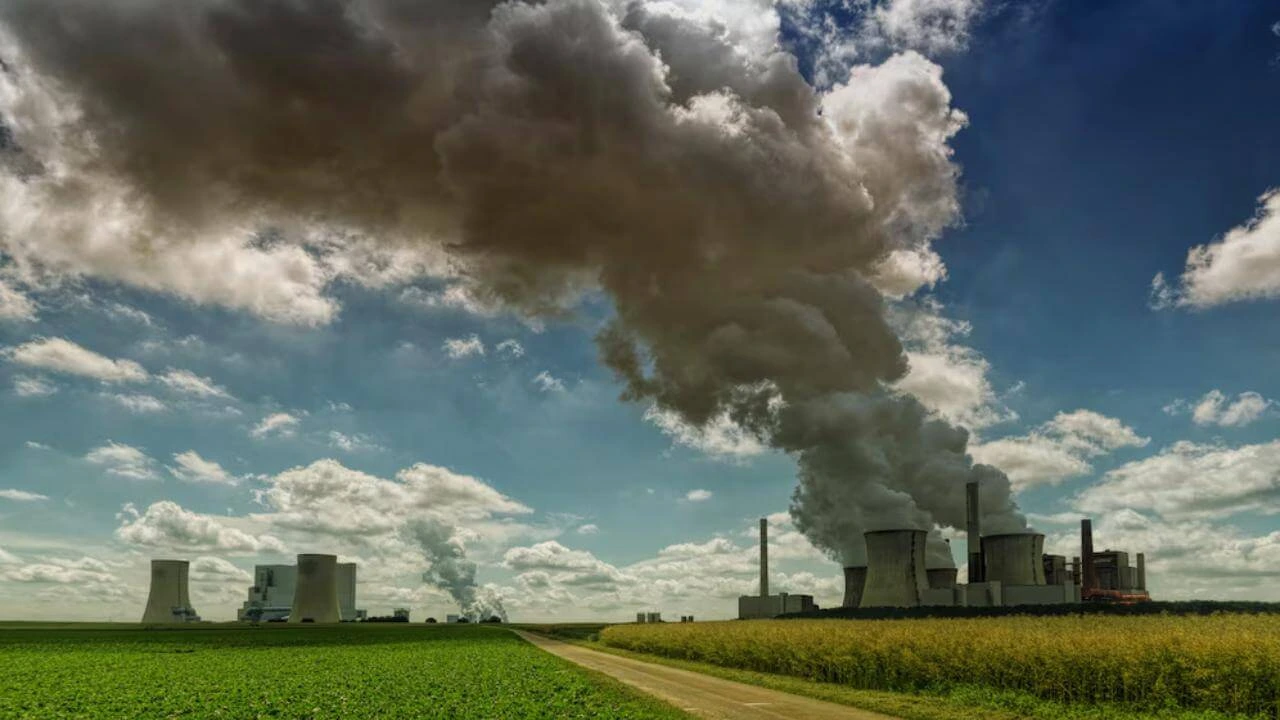
CAPTOR objectives address the general air pollution problem, which will be depicted by monitoring specifically the tropospheric ozone. Ozone is frequently considered a forgotten pollutant, in the sense that it is formed in rural areas through chemical reactions from precursor gases emitted mainly in urban environment.
Therefore, the polluters (the urban population) often do not suffer to the same extend the effects from the degraded air quality generated by their emissions, whereas the rural population has limited influence on the emissions, which degrade the air they breath. Because of this spatial de-coupling of the sources and the effects, ozone (O3) pollution usually receives less attention than that dedicated to other pollutants such as particulate matter, sulphur dioxide (SO2) or nitrogen oxides (NOx).
CAPTOR’s purpose is to foster bottom-up collaboration of local communities, citizens, NGOs, and scientists to raise awareness and find solutions to the air pollution problem. More specifically, CAPTOR objectives are:
- To engage a network of local communities in three European regions for monitoring tropospheric ozone pollution
- To engage these local communities in a collaborative learning process about air pollution, supporting a bottom-up process of defining and designing measures for action.
- To empower citizens and engage them in promoting active participation in decision making to drive solutions.
- To learn and to assess the effectiveness, replicability and creative power of the approach.
Gamification and Digital Engagement: From Eco-Monitoring to Modern Platforms
A primary challenge for long-term citizen science initiatives like CAPTOR is maintaining continuous participant motivation and daily interaction. To address this, developers increasingly adopt gamification-integrating reward systems, interactive progress tracking, and visual badges into environmental monitoring applications.
Interestingly, many engagement mechanics used to keep volunteers involved are inspired by the digital entertainment industry, particularly the online gambling sector. Platforms offering popular casino games and multiplayer online games have spent years perfecting user retention strategies, real-time feedback loops, and intuitive dashboard designs.
By analyzing how a modern online casino creates seamless, highly captivating user experiences, environmental software developers can build more effective community tools. Whether a user is exploring entertainment options on a casino platform or logging daily ozone measurements, user-centric interface design remains critical. Blending structural engagement elements from online games with grassroots environmental science transforms routine data collection into an interactive habit, driving long-term civic participation in air quality solutions.